Before You Paint Your House, Check the Gutters. Beige Cannot Fix a Leak.
You have chosen the colour. You have rejected fourteen almost-identical greys. You have had a surprisingly emotional conversation about whether the white is too white.
The painter is booked. The house is getting its moment.
Meanwhile, above the freshly sanded wall, a gutter is quietly preparing to pour rainwater down exactly the same patch that peeled last time.
Twelve tester pots. One unresolved leak. We may have prioritised incorrectly.
Before repainting your home’s exterior, it is worth asking a less glamorous question: is the surface simply tired, or is something still getting it wet?
That distinction can change the order of the work and help you avoid paying to decorate a problem that has not actually been fixed.

Should you repair or replace gutters before painting your house?
Inspect the gutters, downpipes, fascias and roof edges before exterior painting. Repair leaks, blockages and damaged supports first. Replace guttering only where its condition or performance justifies it. Then allow affected surfaces to meet the paint manufacturer’s moisture requirements before preparing and repainting them. Agree the installation and painting sequence with both contractors. Addressing excess moisture before repainting is also a core recommendation in paint-manufacturer guidance.
The principle is straightforward: fix the source of the water before fixing what the water has done.
Your paint might be innocent
When paint starts blistering or peeling, it is tempting to blame the product. Sometimes the coating or its application is the problem. Sometimes moisture, poor surface preparation or an unsuitable underlying surface is involved.
A leaking or overflowing gutter is one possible source of repeated wetting. It is not the only one.
Roof defects, failed detailing around openings, plumbing leaks and other damp problems can also need investigation. A mark on a wall is a clue, not a diagnosis.
That is why repainting the same patch repeatedly can become such an expensive little tradition. The appearance improves, but the cause carries on working behind the scenes.
The aim is not to sell every homeowner new gutters. It is to stop guessing.
What should you check before the painter arrives?
Start with what you can see safely from the ground. Take photographs of recurring marks and the roof edge above them. Leave roof access, ladder work and loose overhead components to an appropriately equipped contractor.
These observations can help direct an assessment:
| What you notice | What to investigate before repainting |
|---|---|
| A recurring stain beneath a gutter corner | The connection, nearby outlet and how water leaves that section |
| Water spilling over the front of a gutter | Debris, outlet restrictions, alignment and whether the whole system has sufficient capacity |
| A gutter pulling away from the roof edge | Its fixings, supports and the condition of the structure behind it |
| A wet streak alongside a downpipe | Pipe connections, damage, blockages and where the pipe discharges |
| Peeling or damp that returns despite gutter repairs | Other moisture sources and the suitability of the paint preparation and coating system |
None of these signs automatically means the entire gutter system needs replacing. They are reasons to investigate, not instructions to start ordering materials. Blockages, deterioration and poor water flow deserve attention, but the cause of paint failure still needs to be established.
Our gutter maintenance guide explains the routine checks. Where overflow continues after the system has been cleared, our 125mm vs 150mm gutter guide explains why capacity and downpipe arrangements also matter.
Do not give a damaged fascia a cosmetic promotion
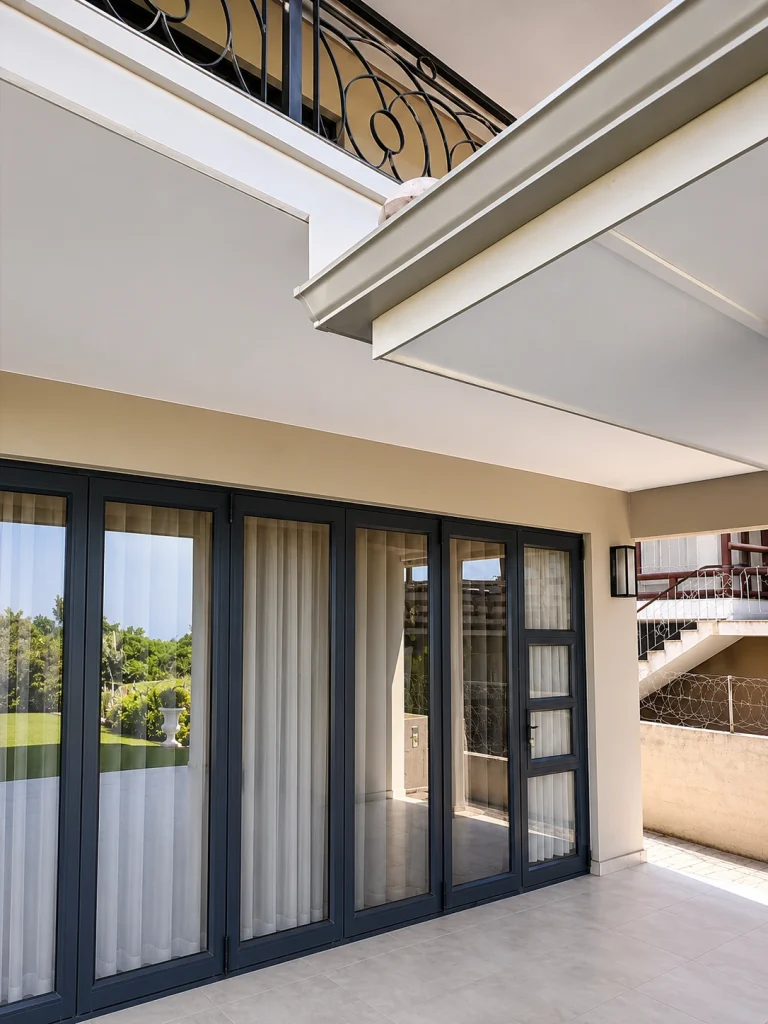
The fascia runs along the lower roof edge and commonly forms part of the support arrangement for the guttering. Barge boards finish the sloping roof edges. They have different jobs, even though they tend to get invited into the same renovation conversation.
A fresh coat of paint cannot restore the strength of rotten timber or secure a failing fixing.
Painting over a weak fascia is not a structural repair. It is a costume change.
The supporting structure needs to be sound before new guttering is attached. Where a board is serviceable, preparation and an appropriate coating may be all that is needed. Where it has deteriorated, repair or replacement should be assessed first.
Our fascia boards vs barge boards guide explains the difference. Hibiscus Gutters also provides fascia and barge board repairs and installation, including work coordinated with gutter replacement.
The sensible order: investigate, repair, prepare, finish
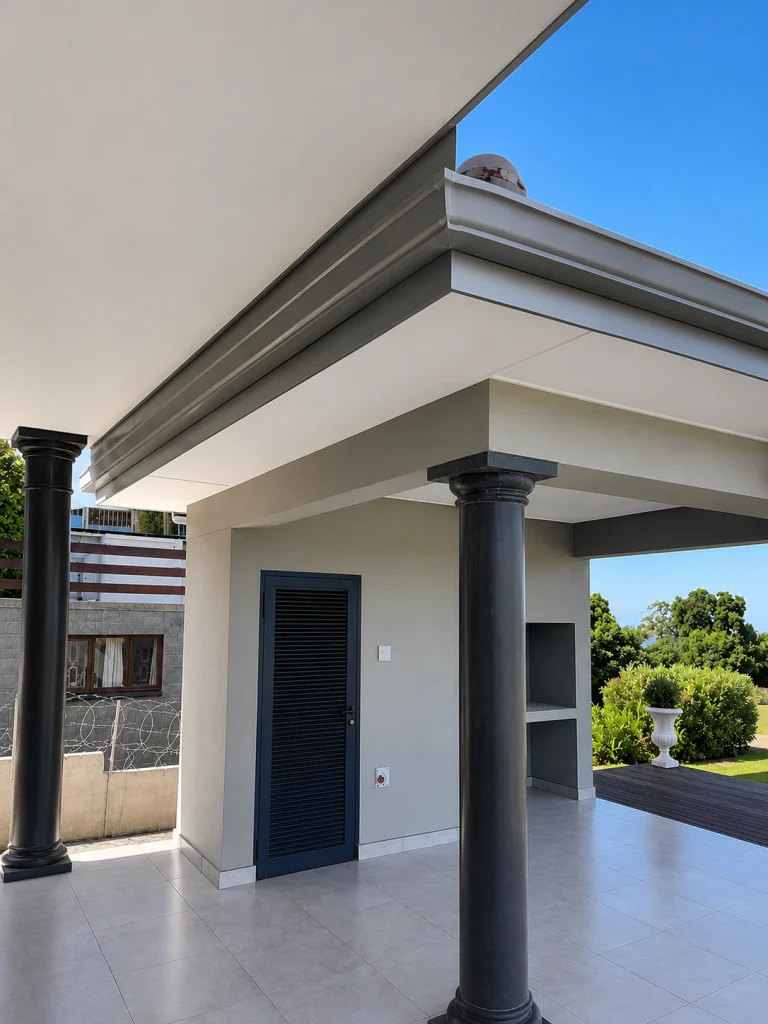
There is no single installation timetable that suits every house. Some sound gutters can stay in place while surrounding surfaces are painted. Other jobs need gutter removal to expose and repair the roof edge.
What matters is agreeing the sequence before anyone opens the paint tins.
First, identify what is causing the damage
Ask whether the problem begins in the gutter, the downpipe, the roof covering, the roof-edge detailing or somewhere else entirely.
A gutter contractor, roofer and painter may each see a different part of the same problem. Getting those observations together is more useful than asking the newest coat of paint to be unusually brave.
Hibiscus Gutters can assess issues within its roofing and roofline service scope. Specialised waterproofing is a separate service and is not offered by Hibiscus Gutters.
Next, agree what needs repairing and what can stay
A localised problem does not automatically justify a complete replacement. An isolated connection, obstruction or fixing issue may have a more limited solution.
Equally, repeated patching may be poor value where a gutter run has widespread damage or the supporting roof edge is failing.
Ask the contractor to explain the reason for the recommendation. A useful quote should distinguish between necessary repairs, optional improvements and work outside its scope.
Then, let the surfaces become suitable for painting
A wall that looks dry is not automatically ready for every coating system. Surface condition, residual moisture, preparation and weather during application all matter.
There is no responsible universal answer such as “wait two days and paint everything”. The painter should follow the chosen product’s requirements and assess the actual surface, including moisture testing where appropriate.
Primer is useful. It is not permission to ignore an active leak.
Finally, coordinate the finish and check the water route
Where new gutters are needed, agree when any fascia preparation and painting will happen, when the gutters will be fitted, and who will handle final touch-ups.
Then check the whole route, not just the attractive bit along the roof:
Roof to gutter. Gutter to outlet. Outlet to downpipe. Downpipe to an appropriate discharge point.
A neat gutter does not complete the job if the downpipe simply deposits the water against the freshly painted wall below it. Keeping downpipes clear and directing water away from the building remains part of basic gutter care.
Repair or replacement? Let the condition decide
Replacement deserves consideration where there is extensive deterioration, repeated failure or a system that cannot be made suitable through reasonable repairs and drainage improvements.
But a blocked gutter is not automatically an obsolete gutter. A leaking connection is not proof that every metre has failed. And a bigger profile will not solve a blocked downpipe.
When replacement is appropriate, Hibiscus Gutters offers seamless aluminium gutters manufactured on site in 125mm and 150mm O.G. options. The suitable profile needs to be selected for the property.
Seamless construction reduces joins along straight runs. It does not remove corners, outlets, end connections or the need for maintenance.
Good specification is more convincing than promising that a product can never fail.
Choose the colours together, not in separate family meetings
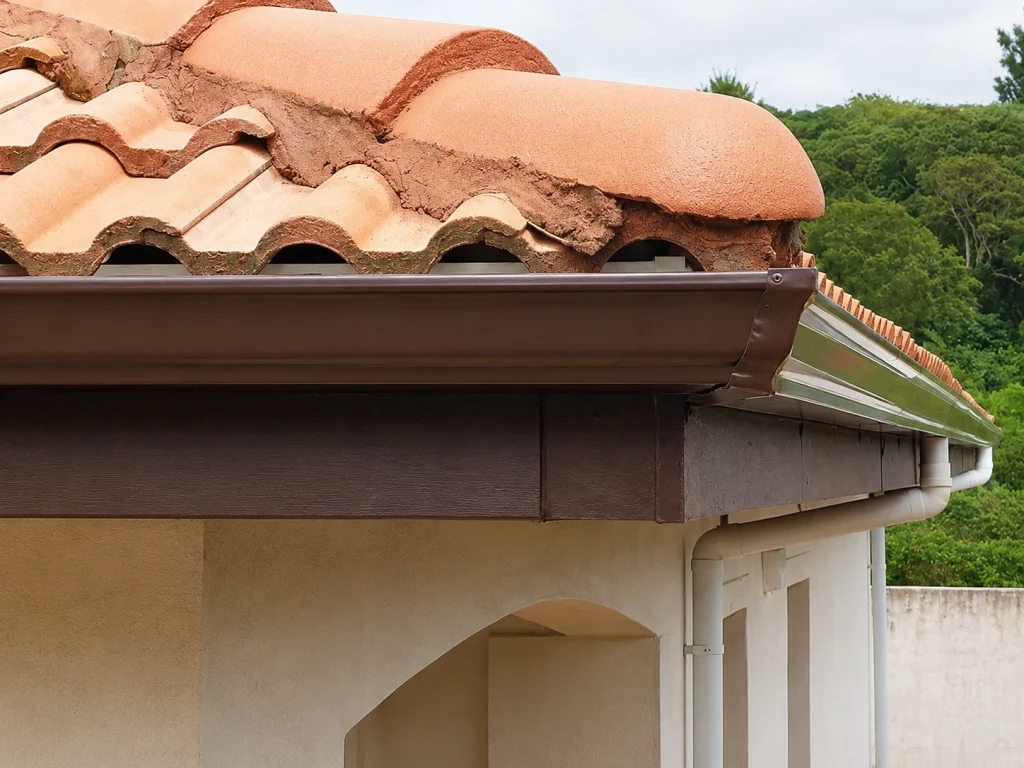
Once the practical problems are addressed, the enjoyable decisions can have their turn.
Consider the gutters, downpipes, fascia, roof and walls as one exterior scheme. A gutter can blend into the roof edge or provide a deliberate contrast. A downpipe can match the gutter or be coordinated with the wall, subject to the available finishes and suitable preparation.
Hold samples against the actual building and look at them in daylight. A colour on a phone screen has not visited your house and should not be chairing the meeting.
Our article on colour-matched gutters and kerb appeal explores the design side. Confirm current gutter colours with Trevor before committing to the rest of the scheme.
Colour coordination improves the appearance. It does not, by itself, stop corrosion, repair damp or increase drainage capacity. Those are separate decisions.
Make the plan specific to your property
A seaside home and an inland property near Kokstad should not receive identical advice simply because both fall within the wider region we serve.
Ask about your building’s actual exposure: proximity to sea spray, shade, surrounding trees, existing materials and the conditions required for the proposed coatings. Include access and working height in the discussion too.
The most useful recommendation starts with your roofline and the problem in front of you. Ask the contractor to explain the choices for your particular property.
Before you spend money on the finish, check what is behind it
An exterior repaint should be the finishing stage of a properly planned job, not the opening act in another round of leak investigation.
At Hibiscus Gutters, we can assess gutters, fascias, barge boards and relevant roofing issues, then recommend work within our service scope. Where a problem needs a specialist waterproofing assessment, that needs to be handled separately.
For a quote enquiry, send Trevor your town or postcode, a brief description and photographs taken safely from the ground. Include the recurring stain or damaged area and the roofline above it, rather than only a close-up of the peeling paint.
Contact Hibiscus Gutters about your roofline before repainting, or browse the project gallery for examples of the work shown on our site.
By all means, choose the beautiful beige. Just do not ask it to fix a leak.
Frequently asked questions
Should I replace my gutters before painting my house?
Inspect them first. Repair active leaks, blockages and damaged supports before repainting affected surfaces. Replace the gutters only where their condition or performance warrants it, and coordinate the work with the painter.
Can leaking gutters cause exterior paint to peel?
They can contribute by repeatedly wetting the wall or roof-edge materials. However, peeling also has other possible causes, including surface preparation, application conditions and moisture from elsewhere. Diagnose the cause before repainting.
Do fascia boards need replacing whenever gutters are replaced?
No. Sound boards may be retained. Damaged, weak or deteriorated boards and their supporting structure should be assessed before new guttering is fitted.
How long should a wall dry after a leak is repaired?
There is no single drying period for every wall. The material, extent of wetting, weather and coating requirements all matter. Follow the paint manufacturer’s requirements and have the surface assessed rather than relying on appearance alone.
Does Hibiscus Gutters offer specialised waterproofing?
No. Hibiscus Gutters assesses and carries out work within its guttering, fascia, barge board, roofing and rainwater service scope. Specialised waterproofing requires a suitable specialist. See our service FAQs for the current scope.