Fascia Boards vs Barge Boards: Who Does What Up There?
The difference between fascia boards and barge boards is their position. Fascia boards run along the lower roof edge, usually behind the gutters. Barge boards follow the sloping edges at a gable end. Both finish and protect the roof edge, but they do different jobs.
If you have ever pointed upwards and described a roof problem as “that white thing next to the other white thing”, you are in excellent company.
Roofline terminology sounds like a committee named the parts during a particularly long meeting. Fortunately, you do not need to become a roofer to understand which board needs attention.
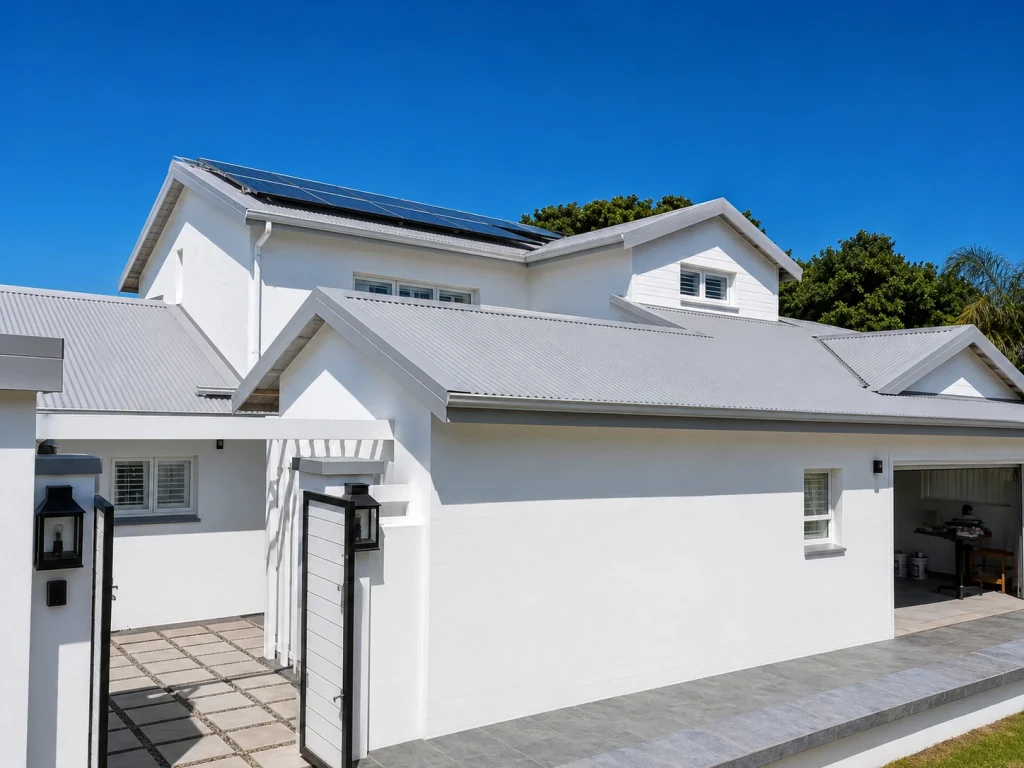
What is the difference between fascia boards, barge boards and soffits?
| Part | Where to look | What it does |
|---|---|---|
| Fascia board | Along the lower roof edge, normally behind the gutter. | Finishes the eaves and covers the rafter ends. Gutter fixings may attach here or through to suitable support, depending on the system. |
| Barge board | Along the sloping edge of a gable: the triangular end of a pitched roof. | Finishes and helps protect the exposed gable edge. |
| Soffit | Underneath the roof overhang, between the outer roof edge and the wall. | Closes the underside of the eaves; some designs also incorporate ventilation. |
Think of the fascia as the horizontal front, the barge board as the sloping side and the soffit as the underside. Roof designs vary, so use that as a starting point rather than a rule for every building.
For a technical explanation of how these parts fit together, Marley’s roof-eaves guide describes the fascia, soffit and barge board within the wider roof system.
Why does the fascia matter when you fit new gutters?
A new gutter needs a secure fixing arrangement. If the fascia or supporting timber is damaged, the installer needs to address that before relying on it to hold the gutter in place.
A tidy board on the outside cannot tell you whether the timber behind it is sound. Nor should every type of fascia be treated as a structural fixing surface: the correct brackets, backing and fixings depend on the product and roof construction.
This is why a gutter quotation should include a check of the roof edge, rather than only a measurement of the gutter run.
Hibiscus Gutters installs seamless aluminium gutters and can include fascia and barge board refurbishment or replacement where needed. Sorting out the support first gives the new gutter something more dependable than a brave face.
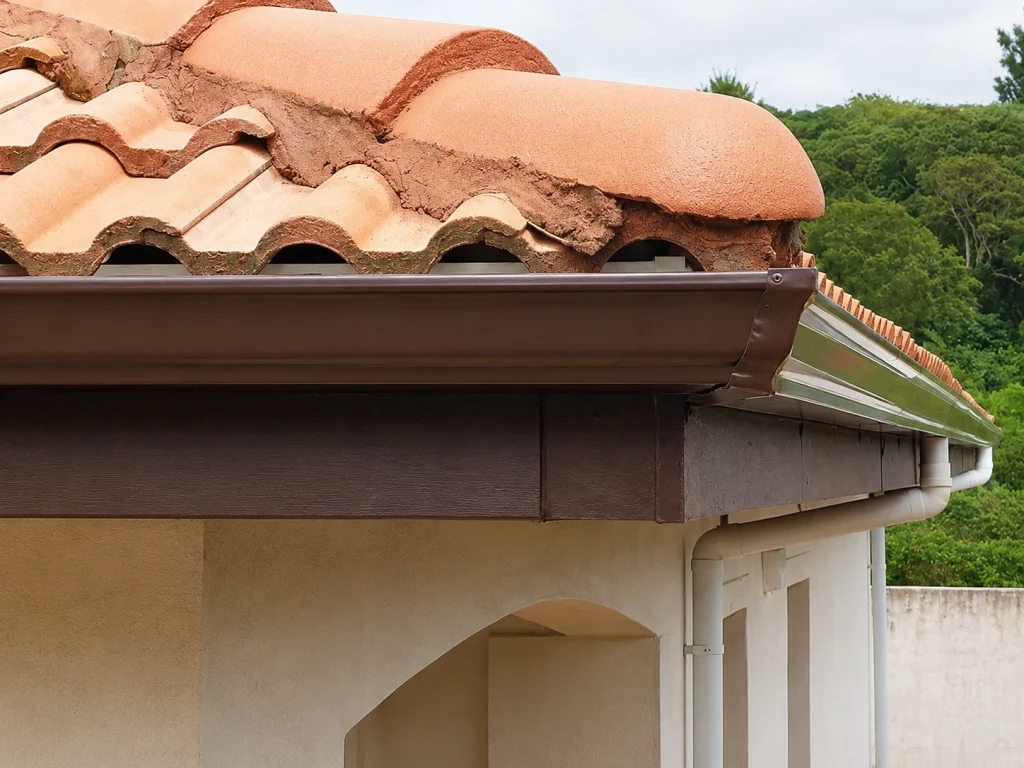
Which signs mean the roofline needs attention?
From a safe position on the ground, look for:
- Cracks, missing sections or open joints in the boards.
- A board pulling away from the roof edge.
- Peeling paint or persistent staining, especially if it returns after repainting.
- A gutter that has dropped or become loose near the fascia.
- Visible gaps around the gable edge or underside of the roof.
- Water repeatedly running behind the gutter instead of entering it.
These are reasons to investigate, not proof that every board must be replaced. A stain may come from a gutter problem, a roof leak or another defect. Repainting without finding the cause can simply give the same problem a fresh outfit.
Leave close inspection and work at height to someone equipped for it. Avoid cutting or sanding unidentified older boards before the material has been checked.
Can you cover old boards, or should they be replaced?
Covering an existing fascia can be appropriate when the backing is sound and the cover product is designed for that use. Rotten, loose or otherwise unsuitable support needs attention first.
There is a difference between refurbishing a serviceable roof edge and hiding a failed one. A shiny cover over rotten timber is the building equivalent of putting a nice shirt on a problem and hoping nobody asks questions.
Ask what will remain underneath, how its condition will be checked and how the gutter will be secured. Eurocell’s fascia guide makes the same distinction between capping suitable existing fascia and using a full replacement product.
Should you choose PVC or fibre cement?
Hibiscus Gutters offers PVC and fibre cement fascia and barge board options. The right choice depends on the roof detail, the desired finish and the installation requirements.
PVC roofline products can reduce the repainting needed for traditional exposed timber. Fibre cement offers a paintable finish and resistance to rot. Neither choice removes the need for suitable support, correct joints and fixings, or occasional checks.
For example, Everite’s Nutec fascia and barge board guide stresses the importance of an accurately aligned supporting structure.
For a coastal property or an inland home, ask which product and fixing arrangement suit the actual exposure at your address. A sheltered patio and an exposed gable deserve individual attention. “Maintenance free forever” is a lovely phrase; it is less useful than knowing what needs checking.
Should fascia repairs happen before new gutters?
Usually, any necessary repairs to the fascia or its support should be planned before the new gutters are fitted. A sensible sequence is:
- Check the existing roof edge, boards and supporting timber.
- Identify any roof or drainage fault contributing to the damage.
- Agree which parts will be retained, refurbished or replaced.
- Complete the necessary support repairs and finishing work.
- Fit the gutters with suitable brackets, outlets and downpipes.
The precise order depends on the job, but discussing the whole roofline together helps avoid paying to remove newly fitted gutters so somebody can reach the board behind them.
What should a fascia and barge board quote include?
Ask for a clear scope covering:
- Which fascia and barge board sections are included.
- The proposed material, profile and finish.
- Whether existing boards will be covered, repaired or removed.
- How hidden timber damage will be handled if it is found.
- Any gutter removal, refitting or replacement, plus access and disposal.
The cost depends on the amount of work, access, material and condition of what is already there. A quotation for covering sound boards is a different job from replacing boards and repairing the timber behind them. Compare the scope as well as the total.
A few more roofline questions
Does every house need barge boards?
No. Barge boards are normally associated with gable edges. A roof without gables may use a different edge detail. The roof design determines what is needed.
Will new fascia boards stop gutters overflowing?
Not necessarily. Overflow can involve blockages, gutter fall, outlets, downpipes or capacity. Replacing a board does not resolve those automatically. Our 125 mm versus 150 mm gutter guide explains why the whole drainage system matters.
Can a photograph tell you whether the boards need replacing?
A clear photo can show visible defects and help explain your enquiry. It cannot reliably reveal the condition of timber concealed behind a board. That may require closer inspection.
Need help with your fascia boards, barge boards or gutters?
Hibiscus Gutters can help with roofline refurbishment or replacement alongside gutter work. You can also browse the Hibiscus project gallery to see the details in context.
We service the KZN South Coast, Harding, Kokstad, Matatiele, Mthatha and Umzimkhulu. Include the job’s town or postcode so we can confirm coverage.
Request a quote or send an enquiry, or call Trevor on 082 463 1282. A wide photo of the roofline and a closer photo taken safely from the ground are useful starting points.
And if “that white thing next to the other white thing” is still your preferred terminology, that is perfectly fine. We will know where to start.